OBT
- By obert-1
- Sep 14 2026
How to Choose the Right Muffler for Diesel Generator Sets
How to Choose the Right Muffler for Diesel Generator Sets
Diesel generator sets are widely used for backup power, construction sites, factories, commercial buildings, telecommunications facilities, and other industrial applications. As an important part of a diesel generator exhaust system, the muffler plays a critical role in reducing exhaust noise and safely directing exhaust gases away from the engine and surrounding working environment.
Unlike a passenger vehicle, a diesel generator may operate continuously for many hours under a relatively high and stable load. This creates specific requirements for the generator muffler, including high-temperature resistance, corrosion resistance, structural durability, suitable exhaust flow, and effective noise reduction.
For equipment manufacturers, distributors, contractors, and international buyers, selecting the correct generator muffler can improve system reliability and reduce maintenance problems.
Understand the Generator Application
The first step in choosing a generator muffler is understanding how the generator will be used.
A small standby generator may have different requirements from a large industrial diesel generator. Similarly, generators installed outdoors can face different environmental conditions from those installed inside a power room.
Important application factors include engine power, exhaust gas flow, operating hours, installation location, ambient temperature, and expected service life.
A professional muffler manufacturer can use this information to recommend a suitable exhaust configuration.
Choose the Correct Muffler Size
Muffler dimensions should be matched to the generator engine and exhaust system.
The inlet diameter, outlet diameter, body dimensions, and connection configuration all affect installation and exhaust flow.
A muffler that is too small may create excessive exhaust restriction. A product that is too large may increase cost and require additional installation space.
For this reason, buyers should provide detailed technical information when requesting a quotation for a diesel generator muffler.
Engine model, power rating, exhaust pipe diameter, installation space, and connection dimensions can all help manufacturers develop the appropriate solution.
Exhaust Flow and Back Pressure
Exhaust back pressure is an important consideration in generator exhaust system design.
The engine needs to discharge exhaust gases efficiently. Excessive restriction in the exhaust system can negatively affect engine operation and increase thermal load.
A properly designed generator muffler should therefore reduce noise without creating unnecessary resistance to exhaust gas flow.
Internal chamber configuration, perforated tubes, pipe diameter, and gas flow paths all influence muffler performance.
For larger industrial generator sets, exhaust flow requirements can be particularly important because of the high volume of exhaust gas produced by the engine.
Noise Reduction Is Essential
Diesel engines naturally produce significant mechanical and combustion noise. Exhaust noise can become an important concern when generators are installed near offices, residential areas, hospitals, construction sites, or commercial facilities.
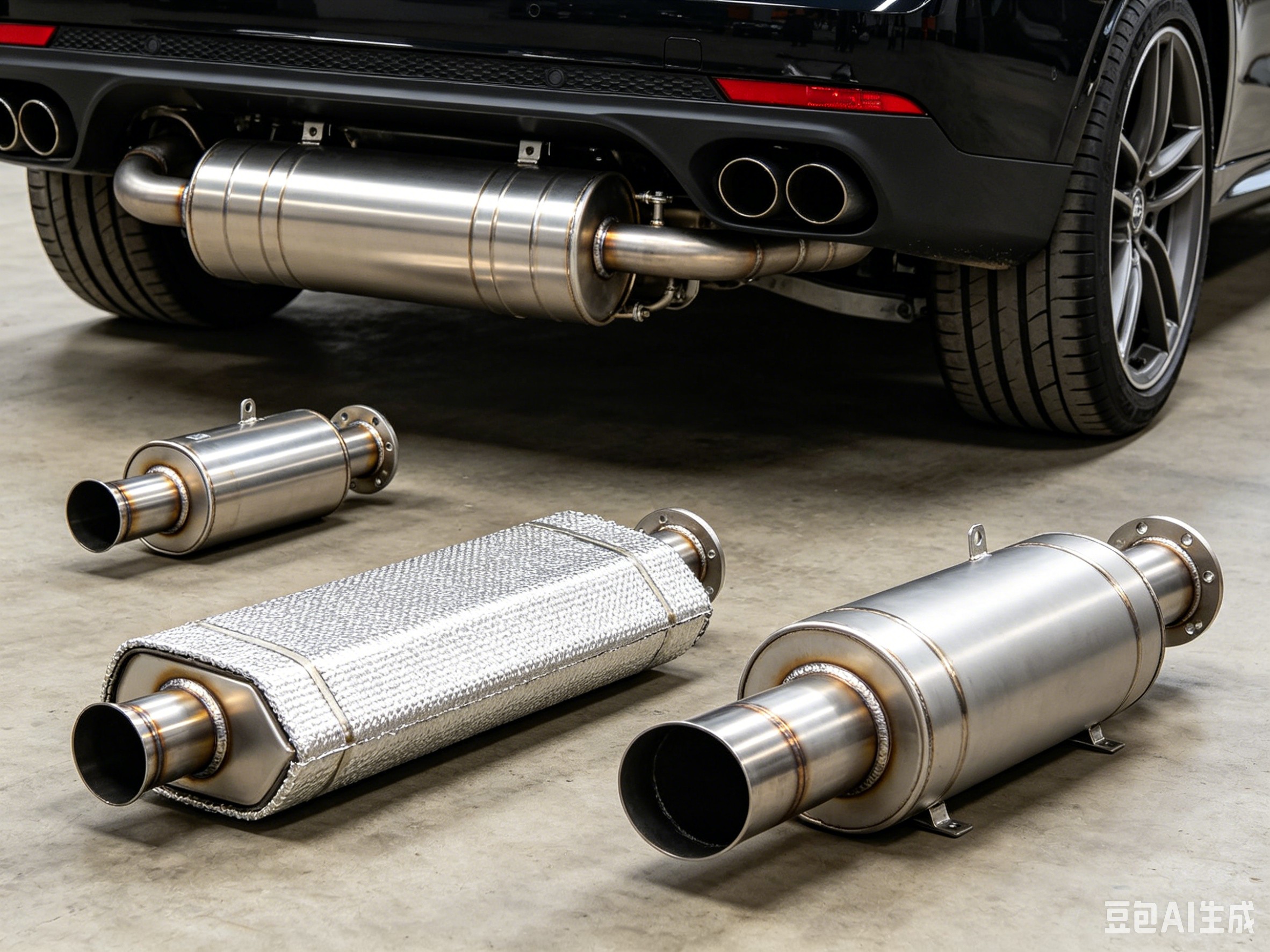
A generator muffler, sometimes called an exhaust silencer, is designed to reduce sound energy generated by exhaust gases.
Different muffler designs can provide different levels of sound attenuation.
Depending on the application, buyers may select industrial, residential, hospital, or heavy-duty exhaust solutions with different acoustic performance requirements.
The objective is to achieve effective noise control while maintaining suitable exhaust flow.
High-Temperature Resistance
Generator exhaust systems operate at high temperatures, especially when the engine runs continuously under heavy load.
The muffler must therefore withstand repeated thermal cycles without excessive deformation or structural failure.
Material selection is particularly important in this situation.
Stainless steel can be an attractive choice for applications requiring good corrosion resistance and durability. Other steel materials may also be suitable depending on the generator specification, operating environment, and target cost.
A professional manufacturer should select the material according to the actual application rather than using the same material for every generator.
Corrosion Resistance and Outdoor Operation
Many diesel generators are installed outdoors or in environments where moisture, dust, chemicals, and temperature changes are common.
Condensation inside the exhaust system can also contribute to corrosion.
A corrosion-resistant generator muffler can help extend exhaust system service life and reduce the frequency of replacement.
This is particularly important for generators used at construction sites, remote industrial facilities, mining operations, and outdoor infrastructure projects.
For customers operating in coastal or high-humidity environments, material selection deserves additional attention.
Mounting and Installation Requirements
Even a high-quality muffler may cause problems if its dimensions or mounting configuration do not match the generator.
The location of mounting brackets, inlet and outlet directions, overall height, and connection method should all be checked before production.
For OEM generator manufacturers, customized mounting configurations can simplify installation and help maintain a clean exhaust layout.
A manufacturer with OEM and ODM capabilities can produce generator mufflers according to technical drawings, samples, dimensions, or customer specifications.
Custom Generator Muffler Solutions
Generator manufacturers and international distributors may need different exhaust products for different engine models.
A standard muffler cannot always meet every requirement.
Custom generator mufflers can be developed according to:
Engine model
Engine power
Exhaust flow
Inlet diameter
Outlet diameter
Overall dimensions
Mounting brackets
Material requirements
Noise reduction requirements
Installation environment
Customized manufacturing is especially useful for OEM customers that need consistent products for specific generator models.
It also allows distributors to source products designed for particular markets instead of relying entirely on generic replacement parts.
Quality Control Matters
Generator mufflers must be reliable because exhaust component failure can interrupt equipment operation.
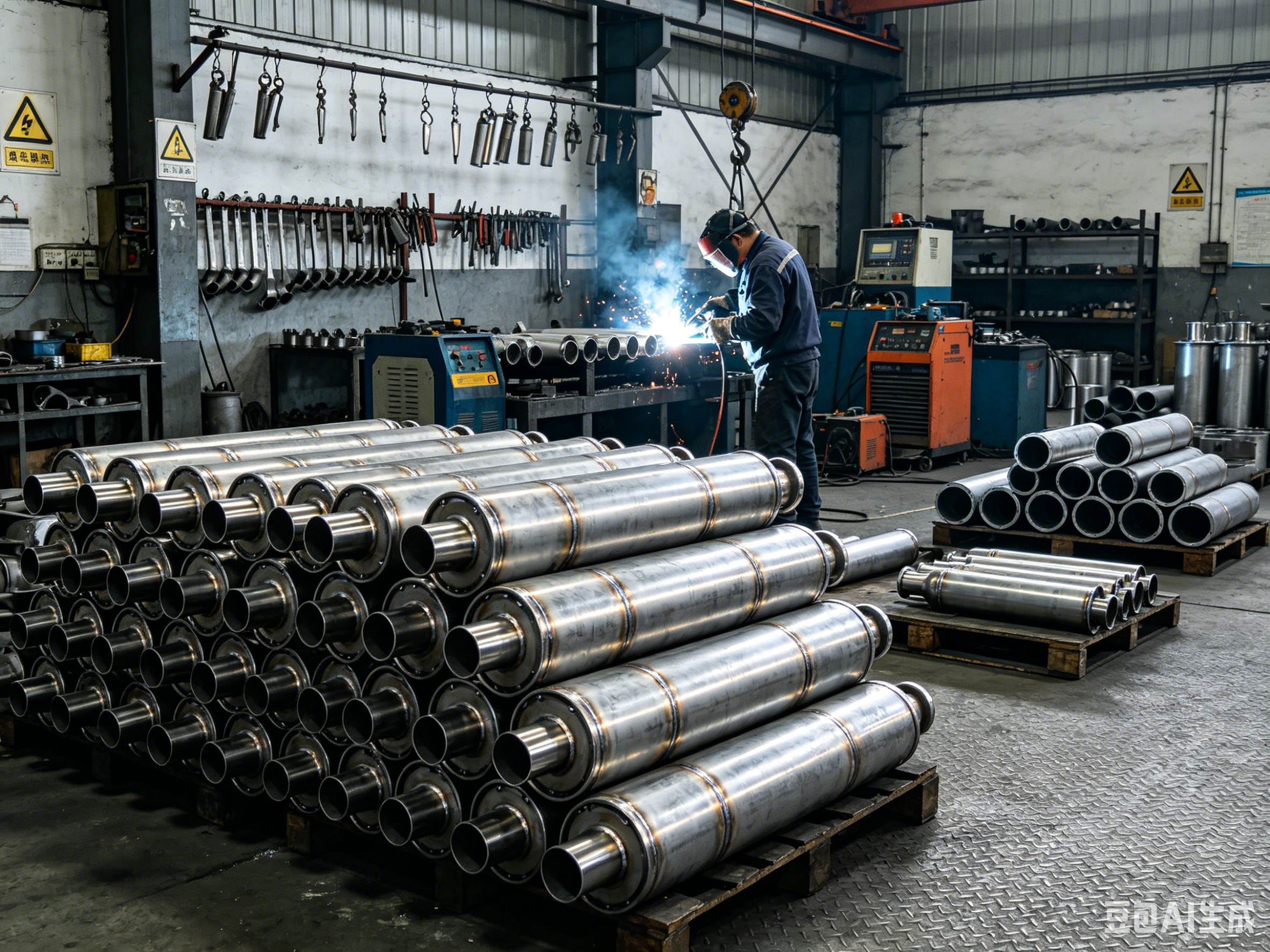
A good manufacturing process should include raw material control, dimensional inspection, welding inspection, connection verification, and finished-product quality checks.
Welding quality is particularly important because generator exhaust systems experience vibration and repeated thermal expansion and contraction.
Accurate dimensions are also essential for installation.
For large-volume orders, consistent production quality can help distributors reduce returns and installation problems.
Choosing a Reliable Generator Muffler Manufacturer
When purchasing generator exhaust components internationally, buyers should evaluate the manufacturer's production capabilities rather than focusing only on unit price.
Important factors include:
Manufacturing experience
OEM and ODM capability
Material control
Welding technology
Quality inspection
Production capacity
Customization capability
Packaging
Export experience
Technical support
A manufacturer that produces generator mufflers together with exhaust pipes, automotive mufflers, truck mufflers, construction machinery mufflers, and other exhaust components may also provide more comprehensive sourcing options.
Generator Exhaust Systems and Future Development
Although renewable energy and battery storage are expanding, diesel generator sets remain important in many applications where reliable backup or continuous power is required.
Data centers, construction projects, factories, remote infrastructure, and emergency power systems can all require dependable generator equipment.
As generator technology develops, exhaust systems will continue to focus on noise reduction, emissions control, thermal management, durability, and compact installation.
This creates continuing demand for well-designed generator mufflers and exhaust system components.
Conclusion
Choosing the right generator muffler requires careful consideration of engine power, exhaust flow, back pressure, noise reduction, material, temperature, corrosion resistance, and installation requirements.
For diesel generator sets, the muffler is not simply a noise-control component. It is an important part of the complete exhaust system and must operate reliably under demanding conditions.
For OEM manufacturers, distributors, and international buyers, working with an experienced generator muffler manufacturer can provide access to customized products, stable quality, and flexible production solutions.
Whether the application is a commercial generator, industrial genset, construction-site generator, or large diesel power system, a properly designed muffler can contribute to reliable exhaust performance and long-term equipment operation.
Shandong Obert Machinery Technology Co., Ltd. specializes in automotive exhaust systems and related metal parts. We manufacture mufflers, catalytic converters, exhaust pipes, and stamped components, and provide OEM & ODM services for commercial vehicle manufacturers with customized engineering solutions.